

True Love Honey · The Information Bank
Wonderful honey.
Honest answers.
Does local honey help seasonal allergies? Let’s look at the pollen, the studies, and the difference between feeling better and knowing why.
Local honey has not been established as a treatment or cure for seasonal allergies. We love producing it. We also believe you deserve evidence before anyone promises you a health benefit.
01 / Start with the biology
Yes, honey can contain pollen.
That doesn’t make it allergy medicine.
The familiar story sounds plausible: bees visit local plants, honey contains pollen, and eating that honey should teach your immune system to tolerate the pollen outside your door. But the presence of pollen alone cannot establish a treatment.
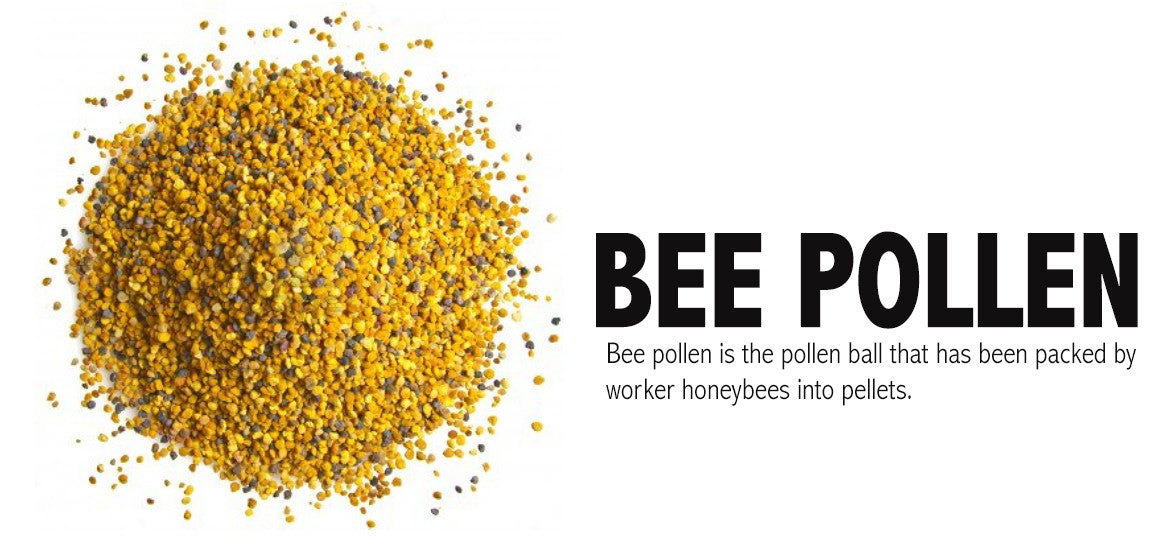
Honey is made primarily from nectar. Bees also collect pollen as food for their colony. Pollen grains can find their way into honey; you do not need to see them with the naked eye for them to be present.
Nectar and floral pollen
Bees forage at flowers. Their visits can transfer pollen between plants, and honey can carry pollen associated with those visits.
Airborne pollen
Wind-carried tree, grass, and weed pollens are common seasonal triggers. These are not interchangeable with the floral pollens usually associated with honey.
ACAAI explains that honey generally contains much smaller amounts of the airborne allergenic pollens. The practical questions are which allergen, how much, and whether that exposure has been shown to help. [1]
02 / A tempting comparison
A spoonful of honey isn’t an allergy shot.
Allergen immunotherapy uses selected allergens with known doses and a planned schedule. That is very different from eating a food with an unpredictable pollen mixture. [1]
Local describes where honey comes from. It does not tell you whether a jar contains the allergen that affects you, how much of it is present, or whether swallowing that amount produces a useful immune response.
A shared ingredient is not the same thing as a proven treatment.
The analogy would need clinical evidence to support it. A convincing explanation, a local label, or a customer’s recommendation cannot substitute for that evidence.
03 / What has actually been tested?
Read the findings.
Read the limitations, too.
The research includes negative findings and preliminary positive findings. These studies answer different questions, so treating them as interchangeable would obscure what we really know.
Local honey, commercial honey, or placebo
Participants took a tablespoon daily of local unprocessed honey, commercial processed honey, or honey-flavored corn syrup, while continuing usual care. They recorded symptoms and medication use.
Finding: Neither honey group provided symptom relief beyond placebo. This directly tested the everyday local-honey belief, but a small trial cannot settle every question about every honey preparation.
Read Rajan and colleagues’ study [2] ↗High-dose honey alongside an antihistamine
All participants received loratadine for four weeks. The honey group also took 1 gram per kilogram of body weight daily; controls received honey-flavored corn syrup. Symptoms were assessed through week eight.
Finding: Researchers reported continuing improvement in the honey group after treatment ended. This small study is interesting, but it does not establish that ordinary local honey cures allergies or that its local pollen acts as immunotherapy.
The study dose is context, not a recommendation to copy it.
Read Asha’ari and colleagues’ study [3] ↗Honey with added birch pollen
A Finnish study examined preseasonal use of honey with deliberately added birch pollen and regular honey, alongside a usual-care control group.
Finding: The added-pollen group reported better symptom control than usual-care controls. Symptom differences between the two honey groups were not significant. The authors called the results preliminary; the controls did not receive a matching placebo.
Specially prepared pollen honey is a different proposition from buying an ordinary jar of local honey. This pilot supports further research, rather than a general allergy-cure promise.
Read Saarinen and colleagues’ study [4] ↗Our conclusion: These findings do not justify selling our honey as an established seasonal-allergy treatment. We welcome stronger research and will revise this page if the evidence warrants it.
04 / How do we know it worked?
A success story needs a comparison.
Imagine a company gives 100 people “allergy honey,” then advertises that 30 people felt better. That sounds encouraging. Now imagine another 100 similar people receive a matching placebo—and 28 of them feel better too.
Illustration only · Invented numbers, not study results
Both bars use the same 0–100 scale. Improvement alone does not tell us what caused it.
Random assignment helps make groups comparable. Blinding helps reduce the influence of knowing which treatment someone received. A placebo comparison helps researchers judge whether the product adds a benefit beyond other influences. [5]
A two-person difference in this invented example does not prove a benefit—or prove there is none. Researchers must consider uncertainty, the size and importance of the effect, study methods, and replication.
That is why a responsible claim needs more than a collection of happy testimonials.
05 / Respecting your experience
“But it helped me.”
We hear you.
If you ate local honey and felt better, we are not questioning your honesty. Your improvement matters. The question is whether the honey caused it.
Symptoms can change as the season changes. Exposure, weather, time outdoors, and other care can change too. Starting something when symptoms are at their worst can also make a later return toward a more typical level look like a treatment effect.
You can have a completely honest testimonial and still have the wrong explanation for what caused the improvement.
Expectations can influence symptoms—the placebo effect. But everything that improves in a placebo group is not necessarily caused by expectation. Natural fluctuation and other influences also contribute to the overall placebo response. [5]
Controlled research helps separate these possibilities. It is a way of taking the question seriously while respecting the person asking it.
06 / Common questions
A few more honest answers.
Does “raw” or “unfiltered” prove an allergy benefit?
No. Those descriptions concern the honey’s processing. They do not establish a clinically effective allergen dose or a benefit for seasonal allergies. The 2002 trial included local unpasteurized, unfiltered honey and found no advantage over placebo. [2]
Is this saying honey could never have a medical use?
No. This article addresses the claim that eating local honey treats or cures seasonal allergies. A finding about another use, a different preparation, or another condition would need to be evaluated on its own evidence.
Should I stop my allergy treatment and try honey?
Do not replace a prescribed treatment with honey on the strength of an allergy claim. Discuss persistent symptoms and treatment choices with a qualified healthcare professional. This page does not prescribe an allergy treatment.
Can honey itself cause an allergic reaction?
Rare reactions can occur, including serious reactions in susceptible people. Having pollen allergies does not automatically mean you will react to honey, but honey is not an appropriate do-it-yourself desensitization method. [1]
Why would a honey company publish this?
Because we want you to trust what we tell you. An attractive health claim may sell a jar, but it still needs evidence. We can speak for our own standards: we will not market our honey as an allergy cure.
07 / Read the evidence yourself
The sources behind the story.
Independent guidance and original studies, with direct links so you can check the details. External research links open in a new tab.
The pollen distinction, the allergy-shot comparison, and cautions about rare reactions. Find the honey question on this page.
Local honey, commercial honey, and placebo. Annals of Allergy, Asthma & Immunology. DOI: 10.1016/S1081-1206(10)61996-5.
Honey alongside loratadine. Annals of Saudi Medicine. DOI: 10.5144/0256-4947.2013.469.
Added-pollen honey, regular honey, and usual-care controls. International Archives of Allergy and Immunology. DOI: 10.1159/000319821.
An accessible explanation of expectation and why randomized placebo-controlled comparisons matter.
Open to better evidence.
Reviewed October 5, 2026. This is a consumer education article, not an exhaustive systematic review. We explain limitations and include preliminary positive findings.